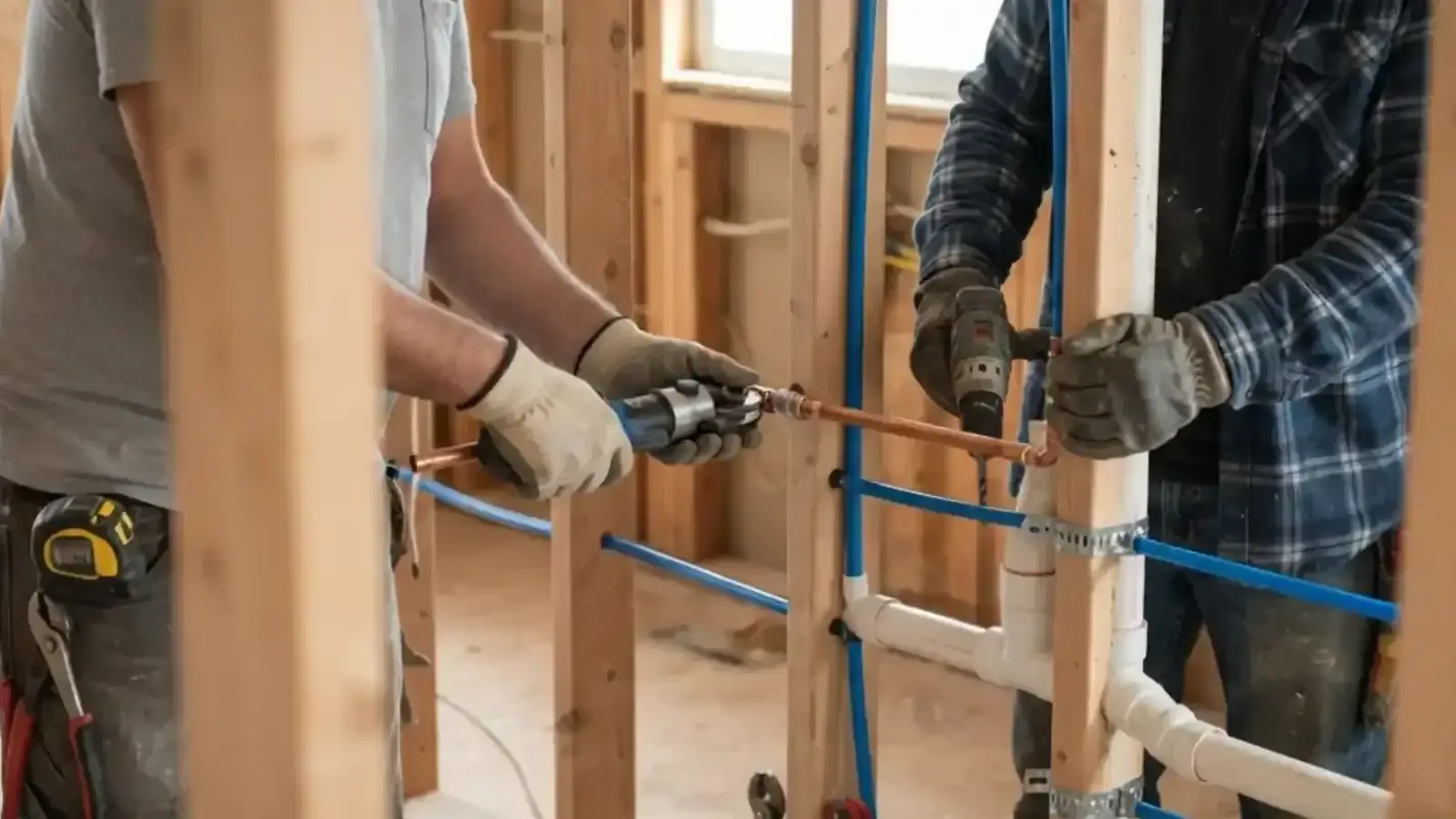
A shower looks simple from outside. Behind the tile, it is a small system. A valve mixes hot and cold water, supply pipes bring both to the valve, a shower arm and head deliver the water and a drain takes it away through a trap that holds a seal of water against sewer gas.
Plan the plumbing before the tile. Moving a valve or a drain after the wall is closed is expensive, and a leak behind finished tile is worse. This guide walks through the parts and the order so you can ask good questions of whoever does the work.
The parts behind the wall
| Part | Purpose | Notes |
|---|---|---|
| Mixing valve | Controls temperature and flow | Pressure-balanced or thermostatic valves protect against scalding |
| Supply lines | Bring hot and cold water | Copper, PEX or CPVC with correct fittings |
| Shower arm and head | Deliver the water | Check flow rating and thread seal |
| Drain and trap | Carry water away and seal the line | Correct slope and a vented trap |
| Vent | Lets the drain flow freely | Tied into the stack or an approved air admittance device |
Rough-in: the order of work
- Frame the walls and mark the valve and showerhead heights.
- Run hot and cold supply lines to the valve location.
- Set the valve at the correct depth for the finished wall.
- Install the drain, trap and vent and test the drain with water.
- Pressure-test the supply lines before any wall is closed.
- Inspect, then close the walls and tile.
A pressure test is cheap and catches the worst surprises. Fill the lines with air or water, watch the gauge and make sure it holds. If the gauge drops, there is a leak, and finding it is easy while the wall is open.
Valve depth and the finished wall
Valves are sold with a depth range, and the valve body must sit within it relative to the finished wall surface. If the wall ends up thicker because of tile and backer board, the valve may sit too far back and the trim will not seat. If it ends up too proud, the handle sits too far out.
Check the depth against the tile plan before you set it. This is one place where a quick measurement saves a return trip.
Westlake notes: permits and water use
New shower plumbing is generally permit work. Westlake's city website lists Building Permits and Registered Contractors among its links without describing the rules, so call City Hall at 440-871-3300 to confirm what your project needs. The Cuyahoga County Board of Health publishes a plumbing plan review and permit application for new plumbing.
Cleveland Water's published tips note that showerheads often leak at the connection to the pipe stem and that pipe tape can fix it. It also suggests a low-flow showerhead as a replacement for an older unit. Both are simple ways to cut water use once the new shower is in.
Drain location and basement showers
In a basement, the drain location is the hardest part. If the main drain sits below the floor, the shower can drain by gravity, but the slab must be cut to run the pipe. If it sits above the floor, a pump system lifts the water to the stack.
Ask your plumber to show you the plan. Knowing where the drain goes means no surprise when concrete is opened and patched. Larger projects with several fixtures are covered by plumbing installation.
Hot water supply for the new shower
A new shower adds to the demand on your heater. If two people shower back to back, check whether the tank can recover quickly. A larger tank, a faster recovery rate or a tankless heater may be worth discussing as part of the project. See also water heater installation.
Common mistakes
- Setting the valve at the wrong depth for the finished wall.
- Skipping the pressure test before the wall is closed.
- Forgetting an access panel when the valve sits behind a finished wall.
- Using a drain with too little slope, which leaves standing water in the pan.
- Not planning for the vent.
We serve Westlake and nearby towns, and our Rocky River page shows the area we cover to the east.
Showerhead flow and pressure
The showerhead sets the flow, and a low-flow head can feel as good as a high-flow one if the pattern is well designed. Pressure comes from the house supply. If pressure is low at every fixture, the cause is probably the main, a regulator or old galvanized lines. See repiping if the pipes are the issue.
Rain-style heads and body sprays need more flow and a valve that can handle it. Check the valve rating before choosing a multi-outlet setup, and ask about a larger water heater if two or three outlets will run at once.
Waterproofing and testing before tile
Water that gets behind tile ruins the wall. The valve body, the niche and the corners need a waterproof layer or membrane, and the shower pan needs a flood test. Fill the pan, mark the water level and leave it for a day. If the level drops, there is a leak, and it is far easier to fix before the tile goes on.
Working with the other trades
A shower is plumbing, framing, waterproofing and tile in a short span. The plumber sets the valve after the framing is ready, the waterproofing crew wraps the valve body and the tile setter finishes the wall. If any of them works out of order, someone redoes a step.
Agree the sequence before work starts, and make sure the valve trim, the showerhead and the drain cover are on site before the wall closes. A missing part on tile day stops everything and costs a visit.
Care after the shower is in
Clean the drain cover and the trap area occasionally to catch hair before it builds up. If drainage slows later, see our drain cleaning page for what we do. Keep a note of the valve brand and model somewhere you can find it, so a future cartridge replacement is easy.
Shower drains, traps and vents are regulated by the Ohio Plumbing Code, built on the International Plumbing Code (IPC) with Ohio amendments. Ask your plumber to confirm the plan meets it before the walls close.
Planning a new shower? Call and we will talk through the plumbing.
Call (440) 468-0237Sources
Showerhead guidance is from Cleveland Water's published tips. Permit information is from the city and county pages named.
Questions homeowners ask
Rough-in often takes a day or two for a standard shower, with the fixtures installed after the tile work is finished.
It keeps the water temperature steady if someone flushes a toilet or runs a tap elsewhere, which protects against scalding.
If the valve sits behind a finished wall, an access panel on the other side makes later repairs much easier.
Generally yes for new plumbing. Call Westlake City Hall at 440-871-3300 and ask about your project.